
Archive | Selling RSS feed for this section

Boston Business Networking with dancing

20 Aug

I was invited to a local business networking party. It’s only for “…young business professionals…” so I’m not sure I qualify anymore! The events are hosted by NetParty and they promise (and I quote):

  • The first two hours of our events are like an extended “cocktail hour” with passed hors d’oeuvres at many events, drink specials, and low music conducive to business networking and making new connections.
  • Later, our events take on a more social atmosphere, with great music, dancing and conversation.
  • Our events are held at the hippest and most interesting venues. However, the music is never so loud that you cannot talk and our crowd is generally comprised entirely of young professionals.
  • We do request “business” or “business casual” dress for our events. With that and a fun spirit, you’re good to go

Well, I wonder how much networking will be business and how much will be social. Guess I’ll have to go! If you’re interested in the Boston Event, it’s next Tue August 26th at The Estate in Boston.

Here’s a free invitation. They also hold networking events across the United States so check out the location near you. If you’re coming to the Boston event, come say, “Hi!” But find me early, I’m not much of a dancer!

Seth calls it "intangibles" I call it "reputation"

14 Aug

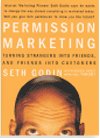
I met Seth Godin years ago at one of those kids activity centers where parents host their pre-schooler’s birthday parties. If you have kids, then you know that pre-school birthday parties means “no drop-off” thus you can’t run a few errands or stop by Dunkin Donuts. I was reading his “Permission Based Marketing” book amongst the happy screams of little kids and I notice out of the corner of my eye that 2 people keep walking past me and smiling. One of them finally approaches me and says, “My husband wrote that book!” The other person walking past me turned out to be her husband, Seth. You’d think that I’d recognize him since his handsome dome was right on the front cover of my book!

I was reading this while my kid was here

Seth’s recent post is about how intangibles are what allows you to charge more for your service vs the commodity-oriented competition. Some of his ideas include participation, enthusiasm, speed, focus, generosity and hope.

Hope? No, not “I hope this deal will close” as that’s not an viable or effective tactic for beating the competition. Instead, “is your offering going to be something great.”

As I’m reading this blog, it struck me that I consider all these intangibles to be my reputation. Just like an intangible, it’s hard to quantify reputation. You either have it or you don’t. Your reputation with your customer is what keeps them coming back to you instead of saving money with your competitor. Your reputation is what gets you the warm welcome when you meet with prospects.

Here’s a few suggestions of mine on ensuring you have the intangibles, the reputation, it takes to compete and win.

Karma Keys to a Referral-Based Business

13 Aug

With 15+ years of sales experience, often working for small companies with no brand recognition or large marketing budgets, I’ve learned that a repeatable process for selling is a must. At the beginning of the sales cycle, giving and getting referrals is key to my business. Cold calling is a necessary evil in sales but it’s less and less effective every day with caller-id and spam filters.

Many sales reps want to GET referrals or will only GIVE a referral if they get one in return. But the most successful referral-based sales reps, business owners and rainmakers know that giving referrals without expectation of one in return is the best course of action in the long term.

My Karma Keys to a Referral-based Business are –

* It’s better to give then receive

Yes, this seems counterintuitive for a sales person but try to give referrals without the expectation you’ll get one in return. That doesn’t preclude you from remembering who behaves the same way you do and networking with them more than others.

* Give referrals to enhance your reputation

Don’t give referrals just as a favor to the person asking for one. Instead, give a referral to enhance your reputation and trust with your colleague that you are making the referral TO. (Often known as the Giver’s Gain theory)

* Get referrals from Customers, Vendors & Sales Colleagues

Don’t limit asking for referrals from customers as your vendors and sales colleagues often have great connections they’d be happy to introduce you to.

* Reputation Matters

No surprise but the better your reputation, the more likely you are to get referrals and be asked for referrals. If you say you can give a referral, make sure that you follow through with that warm introduction. If you get a referral, treat your colleague’s contact with the utmost respect.

Practical Advice from a Wall Street Buyer

6 Aug

I had the pleasure of recently attending a presentation by a Managing Director of one of the top Wall Street firms. His topic was “How to Sell to Wall Street” for small companies, specifically IT ones. It was a great presentation and the entire audience had his full attention. What I found most interesting was that many of his points were not focused on how the sales rep sells to Wall Street. Rather, much of his focus was on setting the vendor’s senior management straight on their obligations to ensure success. I just wonder how many senior managers in the room understood the “what not to do’s” were targeted at them!

Wall Street firms spend money on solutions to:

  • Reduce their costs now. Not in 2-5 years but right now.
  • Support expansion of their high growth market areas. Don’t waste their time on incremental gains in saturated markets. And don’t expect them to tell you what their high growth markets are.
  • Stronger risk & control systems. The current economic crisis is affecting financial services firms worse than the bubble of 2001 did for technology firms. If you have system that helps them reduce risk and improve compliance, they want to know about it. But remember that everyone is pitching “compliance solutions” nowadays.

Selling at the CIO level isn’t the best bet:

  • There are multiple decision makers, all below the CIO level.
  • Tech decisions are made bottom-up by really smart people with a great mix of technology and business savvy.
  • CIO doesn’t have time or desire to pick your solution. They pay their people a lot of money and empower them to make the right decisions. Or get fired. Either way, your only hope with the CIO is that they refer you to one of the decision makers.
  • Work the administrative assistants. Don’t screw with them because they can be your worst enemy.
  • It’s a long sales cycle and they’ll demand aggressive pricing.

The Managing Director said that Wall Street and the metro NYC market is larger than continental Europe. Larger than the next 3 US markets combined. Therefore, “…get in anyway you can….make it easy to buy…legal, pricing, best tech people….but don’t give it away.”

His practical advice for selling to Wall Street:

  • Understand your customer. Yes, this is obvious but remember that the customer knows how important they are in the biggest market in the world and therefore how important it would be for them to be your customer.
  • Remember who has the money. The one with the money (the customer) is the boss. It’s their rules or no money.
  • Don’t out-arrogant arrogant people. They’re successful Wall Street people and you are who?
  • Send them your best. They’re the best so send them your best.
  • Don’t send them resellers. Wall Street wants to work directly with the manufacturer.
  • Give them consistency in sales. Don’t send a new rep every 6 months or worse, a new Sales Engineer every 3 months.
  • Don’t break the process. Use their NDA. Use their license agreement. Don’t redline the agreements so that they look like your agreements. Let your business people review the contracts, not your legal team. Don’t make it hard for Wall Street to do business with you. They won’t.
  • Have a local NYC presence. A rep traveling in from Los Angeles or even Boston doesn’t cut it. Wall Street is the biggest market so invest here.
  • They all talk to each other. If you have cool stuff, they’ll tell the rest of Wall Street. If you fail to heed the advice from above, especially the parts about being too arrogant or not sending your best, they’ll tell the rest of Wall Street that, too.

He summed up his practical advice by repeating “…get in anyway you can….make it easy to buy…legal, pricing, best tech people….but don’t give it away.”

Used car and software sales reps

17 Jul

I overheard a CFO and CTO of a software company talking to each other at the airport. The CTO says to the CFO, “Hey, do you know the difference between a used car sales rep and a software sales rep?”

The punch line was, “A used car salesrep KNOWS when they’re lying!” and the CTO laughed at his own joke.

To the CFO’s credit, he did not laugh. I was certainly tempted to confront the CTO myself. He thinks he’s putting down the sales reps that work for his company. That’s a big issue. A bigger issue is WHY the company’s software sales rep don’t know they’re lying.

I say it’s because at the company sales training, they tell the reps, “Our solution does A, B and C while taking out the kitchen sink!” Of course the reps are going to share that line with their prospects while believing it to be true. Why wouldn’t it be true? Doesn’t the company want to be successful?

But the solution does NOT do all those things. And then the prospect evaluates the solution and finds that it does not do feature B. It certainly doesn’t touch the kitchen sink. Thus, it’s the sales rep that’s accused of lying when the fault really lies (no pun intended) somewhere else.

So who’s the joke on?

RFPs when the main POC is Purchasing

8 Jul

What does your company do when an RFP shows up at Corporate and the main point of contact is not the business user or decision maker but the purchasing agent?

Here’s the situation one of the Inquisix members found themselves in. They’re new to their company while the inside sales manager is experienced. A prospect sent in an RFP to sales@company.com that nobody expected but inside sales pounced on. With the blessing of the VP of Sales (who manages both inside and outside), the inside team ran with the RFP. This blog posting is not about inside vs outside turf battles as regular readers know I’m a big proponent of inside sales. Rather it is solely about the opportunity costs of responding to RFPs.

RFPs take a lot of energy to answer. Big companies have RFP teams and knowledgebases to facilitate the RFP response. But every RFP is different and the questions not always understood. And small companies don’t have the resources to spend chasing RFPs that (maybe) have no chance of closing. In either case, why expend the energy?

So this company decided the only course of action was to follow the RFP instructions exactly and not talk to any one except the purchasing agent. The field rep protested that this was a waste of time and that any prospect expecting to seriously consider the solution would have the business users engaged. Otherwise, it was simple price shopping against a vendor the user had already picked out. The inside manager felt that going around the purchasing agent was the kiss of death.

What does your company do? Who makes the decision to respond to an RFP when the main POC is purchasing? Do you respond without question? Do you go around the purchasing agent?

My answer – you ask the purchasing agent to schedule a 30 minute call with the business users to review the proposal and clarify all the answers. If the purchasing agent declines then you have very little chance of winning. That leaves your choice of either not responding or only responding to the pricing with a low-ball to hurt your competitor.

What’s your answer?

8 Steps to Recession-Proof Your Business

25 Jun

To continue the theme of our March 2008 posting on Recession-Proof Selling, here are three more steps to accelerate your sales, retain your loyal customers and attract new business without increasing your cost of sales.

Steps 1-5 are here.

6. Stay Connected
Get out there. Attend at least one networking event a week. Even better—attend three. Talk to people, find out how you can help each other. Pick up the phone. Email is great, but you’ll get the best information and the most productive relationships when you have a person-to-person conversation.

7. Don’t Cut Price
Many pundits say that the worst thing we can do in a lagging economy is to cut price. Yes and No. Adjusting your price should never be the first thing you do. A marketing expert told me that 95 percent of salespeople cut price before they’re even asked. If you do adjust your price, always get something in return. (Trim fat, not muscle.) Carve out your work and offer smaller chunks. Get in and get started. Help your clients in a down economy and be there when their business turns around.

8. Commit to Building Your Referral Business
What if you could reach your market without hard costs—no marketing budget, no direct mail budget, no advertising budget, no trade show budget. The only budget you need to worry about is your “Time & Referrals” budget—simply your time…your time to ask for referrals!

You know about referrals. When a qualified prospect is referred, you get a new client a minimum of 50 percent of the time, and typically between 70 and 90 percent of the time. Additionally, you are pre-sold, your selling time decreases, you have credibility, and you ace out the competition. There is no other business-development process that can claim these results. Results are the only thing that matter.

Bottom line: Sell more with higher margins, accelerate your “win” ratio, and take business away from the competition.

Become a referral-selling star from your home or office with my No More Cold Calling Webinars.

We are not moving forward with your company

19 Jun

The blog postings about “Morale Killer or Career Limiting Move” have been some of the favorite postings in our blog based on the number of comments. The email below was sent in by one of the Inquisix readers who wanted to share a “thanks-for-nothing” moment by their boss. The subject line of the email (and the title of this post) must have been a kick in the gut to the sales rep receiving this email. Names have been deleted to protect both the innocent and the guilty. And like the first posting of the “Morale Killer or Career Limiting Move” some key information that I wondered about is missing. I’ll share that information as I get it.

But until then, what are your thoughts?

* Surprised the prospect was nice enough to actually follow-up and say, “No thanks”?
* As the sales rep, how would you use this email internally?
* Any ideas on how to get back to this prospect and get another chance?

From: Divisional Manager at Potential Prospect [and decision maker]
To: Sales Rep
Cc: Prospect’s peer
Subject: We are not moving forward with your company

Hi [Sales Rep]. I hope that this email finds you well. I wanted to get back to you and let you know that we will not be going forward with your company. While I truly enjoyed talking with you, I wasn’t overly impressed with the sales approach of [your sales manager]. When a company is selling a service I would expect that the sales approach would be directed to the individual in charge of managing that service. The majority of the conversation was directed to [prospect’s peer] who is not the decision maker. I have to say that a couple of times I thought I would get up and leave, however, I chose to stay because I did not want to appear unprofessional. I feel compelled to make a personal recommendation to your sales manager] to make sure that sales conversations be directed to the individual responsible for making the decision as to whether or not to purchase the product.

Have a nice summer – take care,
[Divisional Manager]

My Contacts or Yours?

6 May

A buddy of mine joined a small company as a sales rep. They hired him because of his experience in the industry and his rolodex. So then he uploads his contacts to their CRM system and the marketing department comes down on him. “Where did you get those names?” “Didn’t you read the employment agreement?” “Take those names out!” were all comments ringing in his ears.

“What’s their problem?” he asks me. I’m thinking it’s the age old battle of defining what constitutes a lead. Marketing considers those contacts to be leads but Sales considers them to be nothing more than names. One group finds value in just the names and the other does not. This is the same battle that companies wage when a sale rep leaves and management tries to make sure the contacts don’t go with the rep.

It’s the combination of my buddy’s industry experience, the rolodex and his relationship with those contacts that makes those names valuable. The rolodex without the relationship is nothing more than the yellow pages suitable for spamming.

So let the rep come/leave with names. In today’s world, those names can be found anywhere on the web so there’s no trade secrets or IP attached to them. What’s valuable is the relationship to those names. And that’s why my buddy got hired, because of his relationships.

Customer One-Line Success Stories as Your Selling Keys

5 Apr

How well do you know the real reasons why your customers use your solution? The more you know the why the better you will be at selling the how. Features are rarely the reason. Sure, features are important but your competitors have features, too. What about the benefits of those features? Yes, more important than features but even junior sales reps right out of Dale Carnegie can recite features. Your company marketing department may supply you with glossy customer success literature to hand out to prospects but nobody reads them and rarely believes the platitudes printed on them.

You want your prospect to engage with you; to think of you as an expert, to move from disbelief to want to need. Your goal is to share brief customer success stories in conversations with prospects so they can see themselves benefiting from your solution in the same way.

Gold key bad powerpoing

The best way to engage with your prospect is to throw those PowerPoint slides that marketing gave you away. “Death by PowerPoint” is an all too-true cliche. I carry only 2 slides with me, printed out and laminated back to back. One side has the logos of all my company’s customers. The other side is diagram of my solution. By only showing the customer logos slide, I can engage with a prospect for 30 minutes just by mentioning the one-line successes each of these customers has had with my solution.

This means:

* My prospect realizes I have important knowledge to impart
* I know my customers, why they buy from my and the value they derive
* Therefore, I am not a transaction-based feature-benefit sales weenie but a trusted advisor

And where is the prospect’s attention focused? Not up on the wall, reading the slide faster than you can talk but rather focused on you. Where it belongs.

So learn your one-line customer success stories by heart, throw away your PowerPoint slides and get back to selling!