Top Inquisix Posts of 2008

25 Dec

Happy Holidays and Happy New Year to all. As the end of 2008 rapidly approaches, the Inquisix team hopes you are all enjoying the holidays with your family and friends. If you’re thinking of prepping early for 2009, here’s some of our most popular articles from 2008.

Why Cold Calling Doesn’t Work:

Cold Calling From the Buyer’s perspective:

Generating Referrals:

Pay or Play for Referrals/Reputation:

You lost me at "Hello"

17 Dec

Stephanie Fox Muller, one of our advisory members, sent me this email along with her comments below.

Why would anyone take a salesperson seriously when their first communication – first! – offers a freebie of four hours of work? Let’s see, I don’t yet know what you do. That means I have to take my time to go to your website and figure it out. Then decide if I want four hours free.

If your fear of the economy is showing, maybe you need to take a step or two or nine back. If your product or service had value before the economy tanked, it still does. If you don’t believe that, you can bet that your prospects won’t. Good sales and marketing people know how to position their offering to meet the current needs of their audience. If you can’t figure out how to sell whatever the heck you offer in light of the current economic conditions, the last thing you want to do is give it away. If it ain’t worth anything to you, it’s worth less to me. And I don’t buy the little disclaimer at the end – if you try us out now, you may buy us later. If I don’t need you now, I won’t remember you later.

Instead of doing the email equivalent of cold-calling with a drop-your-shorts offer, how about asking clients who DO see your value and ask them for referrals?

How Strong is Your Referral?

5 Dec

An interesting post on EyesOnSales by Paul McCord got me thinking early this morning.  He says to make sure you know how strong your referral is before contacting the prospect.  Just because someone gave you a referral doesn’t mean that the prospect values that referral.  Seems like common sense to find out what the relationship is and how strong it might be before acting on that referral.

But maybe it’s not common sense.  Inquisix (as you all know!) maps the process of getting (and giving) referrals online.  Just like a SFA system tracks a sale from lead to prospect to opportunity to close, Inquisix tracks referrals from search to ask to get to rate.  Our data shows that the referrals with the best rating almost always have the best exchange of information at the ask and get stage.  Why?  Because at this stage in the referral exchange is where you are networking with another person to gain a referral from them.  Thus, you are exchanging your bona-fides on why you deserve the referral and why they can deliver on the referral.

The best referrals provide you the opportunity to strengthen your reputation with not one but two parties – the person you’re asking the referral of and the person you’re getting the referral to.  Makes sense to take the time to do it right!

Does Your Best Salesrep Behave Badly?

25 Nov

I’ve recently been catching up on the medical TV show, House. He’s a brilliant doctor who’s interested in diagnosing the diseases but not interested in his patients. He’s arrogant, condescending and a royal PITA*. He’s also one of the top doctors in the U.S. So his behavior is tolerated and even encouraged by his boss when a really tough case comes along.

Don’t we know sales reps like that? They bring in the big deals, save the company’s quarter on more than one occasion and earn more money than their boss. But they’re also rogues who don’t play by the rules, couldn’t be bothered to keep the SFA system up to date and generally ignore the rules without consequences. Their boss has a love/hate relationship with them, with love being highest at the end of the quarter.

What does your company do? Do they tolerate these reps? Embrace them? Fire them? Try to find more of them?

What would you do if you were their boss?

* PITA - Pain in the A**

Face to Face Networking Revival?

22 Nov

Maybe it’s the recession. Maybe it’s learning first-hand the difference between a friend and a “Facebook friend.” Maybe you’re noticing that the phone’s not ringing and the thought of cold calls is making you take a coffee break. Or maybe it’s just the narrow selection of blogs that I read, but it seems that there’s a plethora of recent blog postings on how to network effectively in the real world.

Adrian Miller, author of The Blatant Truth, is offering a quick primer on improving your networking skills. His key point, “You need to know how to effectively communicate with others, build strong relationships, and make the most out of online and in-person networking opportunities. No, it’s not easy, and it’s certainly time consuming, too. But, the benefits of successful networking can be instrumental in growing your business.” Of his tips, the ones I find people forget about most are “Be Appreciative” and “Follow-up and Follow Through”

Then Erica Stritch of RainToday.com just posted a guide, “Face-To-Face Networking for Professional Services: A Primer for Relationship Building.” You can read an excerpt of it although you need to pay for the full download.

And one of my favorite recent titles is a book from Susan RoAne entitled, “FACE TO FACE: How to Reclaim the Personal Touch in a Digital World” Amazing that people might have forgotten the personal touch when online is so prevalent and easy.

Bottom Line – Successful Networking requires WORK and requires both an ON-LINE and IN-PERSON presence. Do all 3 successfully and you’ll be successful. Drop one and you won’t.

They did it and did it big, so can you

21 Nov

I’m already tired of reading about the doom and gloom in the marketplace. How fear is the new driving factor in this recession. So it was very refreshing to read an article about 14 companies that were started during a recession and made it BIG.

You’ll recognize the names, like Hyatt, BurgerKing, FedEx and even Microsoft. Better yet, the article lists Google, PayPal and salesforce.com as recent success stories that thrived during the dot com bubble burst.

So if you’re looking for the silver lining or even a nudge to start your own company during these trying times, then read this article and be motivated!

The Virtual Handshake – Building an online business presence

14 Nov

On the recommendation of a friend, I’ve been reading, “The Virtual Handshake” by David Tetten and Scott Allen.  It’s an interesting mix of research into online networking and practical steps to improve your online networking experience.

They suggest that how you build relationships has not changed since the days of networking via face-to-face and email.  What’s changed is the medium in which you network – now it’s primarily the web. I think that while the web is important, it’s primary purpose is to enhance your face-to-face networking, not replace it.

The book focuses on their 7 keys to building and maintaining an effective online network.  I think these steps would be just as applicable in building an effective in-person network.

  • Your Character – what other people think about you.  It’s your reputation
  • Competence – do you walk your talk?
  • Relevance – how relevant is your network to your networking goals?
  • Relationship strengths – how strong is your tie to the people in your network?
  • Information you know about the people in your network – parallel to the strength of your ties is how much non-published information do you know about the people in your network?
  • Number of people in your network – both your direct and two-degrees-away network
  • Diversity – the more heterogeneous your network the better it can help you

The authors believe that social networking software allows you to have the best of both worlds, a large quantity of high-quality connections.  While I don’t agree with this sentiment, as I wrote here, I do concur with their sentiments that successful networkers focus on what they can give you and not what you can give them.

All in all, a good book to read.  Especially if you are looking for a how-to book on building a sustainable and positive online presence.

Even the Post Office wants to use email

12 Nov

I received a telemarketing call today.  When will telemarketers ever learn?  I first get the silence as their auto-dialing software realizes I picked up the line so it transfers me to a call center rep.  Then he mispronounces my last name and company name.  That’s 3 strikes right there.  But I’m usually interested in the pitches of others, especially cold callers, so I told him to continue.  He was pitching mailing machines.  I told him we do everything electronically and weren’t interested.  So he looked at his script and asked, “Can I send you an email about our services?”  To his credit, he laughed with me after realizing how absurd his question was.  If they don’t use their own service how can they expect their customers to?

More than just Rock Stars need publicists on the Web

29 Oct

Ever want to be so famous that you need a publicist to ensure your name is in the papers and TV? Ever wish you had a publicist to help keep your name out of the press?

Forget George Orwell’s 1984 Big Brother watching you, it’s “little brother” on the web watching you. If your goal is to be found on the web then you need to manage your reputation carefully. It’s so hard to build a good reputation online but unfortunately its very easy to get a bad reputation.

As Maxine Winer, who leads the Reputation Management practice at PR agency Edelman, reminded me, “…one of the top 10 rules of blogging is to always get permission to use someone else’s material…. in the blogosphere, transparency reigns supreme and people are judged (often harshly) based on their authenticity or lack thereof.”

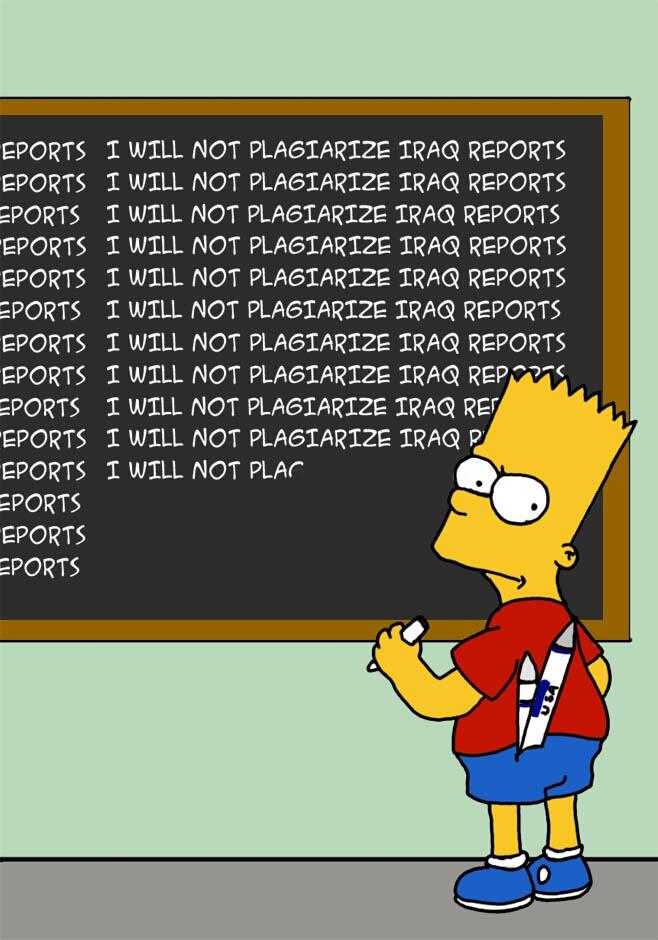
Many of the sales author bloggers I’ve been reading have turned in another sales author/speaker because they’ve found their content published on his website under his name. I first saw Dave Stein mention it in his blog. Then Geoffrey James of Selling Power posted on his blog. Next I saw Jill Konrath’s blog saying that this same author was plagiarizing her content.

When you read the trail of blog postings and comment, what do you think? Maxine and I think this is plagiarism, pure and simple. Maxine told me, “It’s bad behavior in any form–not to mention illegal if the material is copyrighted. In this case, it’s just plain foolish (or perhaps arrogant) to publish on his blog and represent as his own work that was written by others. And word spreads like wildfire online. Repairing a tarnished reputation isn’t easy, but it’s not impossible either.”

After reading these sales author blog postings and talking to Maxine, I suggest:

  • Don’t plagiarize. Duh! It’s unethical and way way too easy to get caught
  • Keep tabs on your own content. Use a service like Google Alerts to search the web for your published content being used without your permission

So what should this sales author do about the plagiarism charges? I asked that question of Maxine and her response was that what he needs to do is admit what he did, acknowledge that it was wrong, apologize (both to those whose material he used and to his readers) and promise to never again use other people’s work without their permission. What do YOU think?

PS - Thank you to The Pandemic Blog for the picuture, where I found another post by an author complaining of plagiarizing.

When a referral is not a referral

28 Oct

I read a great blog post this morning by Diane Helbig on the SalesDog blog entitled, “Don’t Use My Name!

She writes about people who give out someone else’s contact information and tell you to call them but, “…don’t use my name!”  And they consider it a referral.  That’s not a referral, that’s an invitation to start a cold call.

What’s a true referral?  When the person making the referral makes the introduction on your behalf.

You calling someone and saying, “So-and-so gave me your name and told me to call you.” is not a true referral.  And Diane’s example is nothing like a referral. I agree!

Diane thinks this behavior is worse than a cold call because it damages the reputation of the person giving out the contact information and the person acting on that information.

Then she goes on to discuss what quality referrals really mean.

Please go read her article in full!