Archive | Selling RSS feed for this section

Why is selling Cybersecurity so hard?

18 Dec

Why is selling Cybersecurity so hard?  Let’s ignore for the moment that there are already too many cybersecurity vendors competing for dollars and look at how cybersecurity is often sold today.  There’s a post in LinkedIn where the author writes that it can’t be sold as an ROI purchase, which I agree.  Because it’s really an insurance sale, like auto or home or health insurance.  However, selling cybersecurity as an insurance sale to reduce your risk typically leads with a few pitch slides from marketing about all the breaches and subsequent damages that happened recently that would be mitigated if the CISO had only used “our” cybersecurity solution.  I would argue that this is ultimately a FUD (Fear Uncertainly Doubt) sale and quickly turns off the CISOs and their teams.

Instead, consider that companies already have too many cybersecurity tools and many are in the second or third generation.  Anti-virus to EDR to XDR.  SIEM to SOAR.  Firewalls to next-gen firewalls.  And overlapping solutions that say they fix the same breach, albeit in different ways.  The last thing a CISO needs is another tool! So the savvy cybersecurity sales rep sells their solution as a Replacement sale.  CISOs have fixed budgets and sometimes declining ones.  They have tools on their shelf that have not been implemented or just partially implemented.  If you bring a cybersecurity solution to them that adds incremental value to their solution set while also allowing them to remove an existing solution, then you have a winning sale, based on replacement.  CISO can turn off their existing product and use that budget to purchase yours and without asking the CFO for extra budget. And with software sold as a subscription, it’s even easier to turn off an existing product in a short time frame versus waiting for the perpetual license software to amortize to nothing.  And an even bigger win is when you can turn off two or more of their existing solutions with your solution.  

Let’s arm our cybersecurity sellers with the knowledge of what solutions their product can be used to turn off (replacement sale) versus discussing all the breaches that have happened (FUD sale).

For more, follow here https://www.linkedin.com/posts/mskreppein_yesterday-i-brought-up-several-reasons-why-activity-7275159949083648001-Jh88

The Customer’s Story, Not Yours

27 Jul

Are you listening to product pitches that start with the vendor’s history? “Founded in Silicon Valley by really smart people with A-level VC funding and a market-leading solution” goes the pitch. Then they take 10 minutes to explain the problem. Another 20 minutes to explain the solution in (too much) detail. Does that work for you? It does not for me.

As a salesperson, I’m always interested in how other sales people try to sell me. While part of me is listening to their pitch, the other part is thinking about how effective they are. Are they doing things I would not? Are they doing things that I should?

Usually, those “selling to me” experiences have been while I’m a consumer. Recently those experiences have been in the business world and tend to be more relevant to how I do my own job. There are many smaller vendors looking to partner with my current employer on various sales opportunities.  As I am the point person on several large opportunities, I get these partnering calls.

Those that know me also know about my sales material. It’s a double-sided, laminated card with customer logos on one side and my solution architecture on the other. The card gets lots of smiles from peers and customers but it also is quite effective. Why? Because I start with the slide that tells the customers stories.

WasteTime

I got the title of this post from Geoffrey James’ recent article on Inc., entitled, “Tell the Customer’s Story, Not Your Story” The tagline is spot on, “Why are you wasting everyone’s time telling your company’s story?”

I’ve been listening to too many vendor presentations that tell their story. The salesrep has admirable enthusiasm for the solution and a deep knowledge of how it works. But I don’t care yet. What I want to know is WHY other customers are using the solution. I want to know what problem are they solving with this solution. If you can’t start with that information, then you’re wasting everyone’s time.

[5 Aug 2013 Update] Given the number of people who’ve said they’ve encountered this problem as well, I have created these 2 quick polls to see how pervasive this issue is. Please vote!

Trust – Fancy Website or Human Voice

11 Oct

A great comment from Barry Moltz:

“Many years ago small businesses wanted to appear large so customers would trust them. They produced fancy stationery and secured a respectable business address. This has all changed with the Internet, where customers value the human voice. Now every business wants to appear small and provide personal service to its customers.”

And I agree.  I was quite happy to stop the renewal order of new stationery and envelopes and instead spent it on a better website.  But still recognized that a website wasn’t enough, that customers expected a contact link that included phone and address.  It was acceptable that the address wasn’t local as long as there was a viable address.  More importantly was ensuring the phone was answered by a person instead of an automated system.  At my small companies, everyone was the receptionist because the call rang to everyone if the frontline people were otherwise engaged.

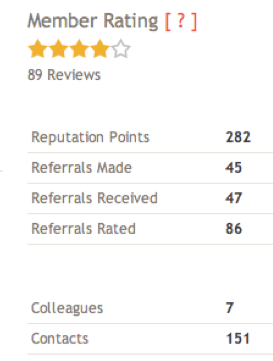
The next level of trust that customers are looking for includes customer ratings.  Think what eBay, Amazon and others started to ensure customer feedback is reflected back to prospects.  Having peer ratings for Inquisix referrals was a key point to the system.

To build trust in today’s market, make it easy for the customer to research and buy your offerings.  No more paper or offices but a well-designed website, a human answering the phone and trust ratings from customers are the new trust factors.

Top Rules for business and starting your career

25 Oct

Today I thought I’d share the two top-10 rules that I have saved and posted in my office. One is from The Daily Beast on Steve Job’s rules for business. The other is a speech attributed to Bill Gates but was actually an op-ed letter by Charles J. Sykes written to college graduates.

Influitive – new spin on referrals and references

31 May

This spring, my dear colleague, Joanne Black, the author of No More Cold Calling, introduced me to Mark Organ of Influitive. Influitive has an interesting twist on the reputation-based referral process that Inquisix built our business on.

Inquisix was focused on helping fill the beginning of the funnel with qualified prospects who came to you, the sales person, based on a referral from someone the prospect trusted. At Inquisix, the network was the salesreps and executives who had high-value relationships with their customers and thus could refer them. Influitive looks at the sales cycle from the point of view of your happy reference customers. At Influitive, it’s these customers who expand their reputation network based on the products and solutions they embrace.

Influitive is in beta now and I encourage any VP of Sales or VP of Marketing who is using salesforce.com to take a look at them.

Happy Selling!

You lose when you show your prospects that they’re wrong

28 Apr

Part of the sales process will inevitably include time spent showing the customer why your solution is better than your competitor’s solution. However, that’s often a delicate dance because while you want to show them that you have the right solution, you need to be careful not to tell them that they’re wrong to want another solution. Especially if the customer has chosen your competitor and is thus the incumbent in the account.

An interesting article in Fast Company discusses how the “birthers” advocates, who believe that President Obama was born outside of the US, still don’t believe he was born in Hawaii despite the recent evidence of his Hawaiian birth certificate. The Fast Company article quotes Psychologist Leon Festinger, who wrote, “”A man with a conviction is a hard man to change. Tell him you disagree and he turns away. Show him facts or figures and he questions your sources. Appeal to logic and he fails to see your point.” So despite the clear evidence of President Obama’s place of birth, many birthers still cling to their claim.

Do you find birthers in your accounts? Maybe you call them the old-guard or the technology bigots. Maybe you ignore them and hope your internal champion is stronger politically. No matter what you call them, how do you change their minds? Would analyst reports and customer references really get them to admit they were wrong? Instead, the Fast Company article felt that you need to give the naysayers a way to save face before they would back down.

Often in sales, we decide to go around these groups after we’ve shown them that they’re wrong and they still refuse to concede. Most often this leads to a lost sale. Next time, try a different approach to gently convert them to your side.

RIM can’t win for trying

23 Apr

I saw reports that the new RIM Playbook had initial sales of under 50,000 units during it’s debut.  I feel bad for RIM being forced to compete against Apple in a category Apple themselves defined.  Being forced by analysts unhappy that RIM didn’t have an offering and then being blasted by the same analysts for the Playbook as not being on-par with Apple has to be a no-win situation for RIM.  The only company that’s done well competing with Apple in this space is Google and it’s primarily because they give Android away for free.

(photo from RIM)

I wonder how I would sell the Playbook to companies if I was the RIM Enterprise sales rep.  My only pitch would have to be the standard pitch of all incumbent vendors to the big enterprises, “We’re already your vendor of choice, we’re the safe choice, you won’t get fired buying with us, our execs know your execs, our new product is good enough, think of the huge implementation costs you’ll incur by switching.”  Even some of the RIM enterprise sales reps can’t use that pitch with confidence as they’ve gone over to sell the iPhone to enterprises.

Poor RIM, they have record sales of product and no respect.  And poor me since I really prefer a physical keyboard so I’ll continue to use the Blackberry…for work…and get the iPad for personal use.

Aspirin vs Vitamins

9 Nov

As a follow-on to my last post about why customers say they’ll buy early-stage solutions but do not, “You love me but you won’t buy”, I read an article in a recent Fast Company that discussed the same issue. Written by Dan and Chip Heath, co-authors of, “Made to Stick”, they discussed the difference between a product considered a vitamin, a nice-to-have – versus an aspirin, a must-have. Some people will pay money for vitamins to stay healthy but everyone will pay for aspirin to cure a headache.

I encourage you to read the article.  Too bad there’s not a recipe for turning your vitamin into an aspirin but they have several examples that can help you brainstorm how to turn your own product into a must-have.

Same old story, “You love me but you won’t buy…”

20 Oct

In two recent meetings with startup executives, the same issue came up.  It was a challenge for us at Inquisix and at many of the startups I’ve talked with.

The issue is that many people SAY they love your idea, your product, your solution and would buy it IF it were only ready.  And of course they tell you to build it, that they have the decision making authority and budget to buy it.  Yes, I’m talking about products sold to businesses but this issue is often true for consumers.

At Inquisix, we had multiple VPs of Sales tell us that they loved the product and could see rolling it out to their sales team.  At an information security company where I was first sales hunter in, the customer literally drooled at the prospect of using our software to monitor employee computer habits.  One the startups I recently met with said that they had paid betas with multiple Fortune 500 accounts.  The other startup had customers saying they loved their medical device and would buy it, all in the first meeting.  And yet each company struggled once the product was delivered.  And why?  Because your prospects, customers, partners and confidents will all encourage you even if they’re not being completely honest with you (and maybe even themselves) on why they won’t (or can’t) ultimately purchase.

At Inquisix, the VPs loved the idea of their reps getting referrals but ultimately struggled with letting them give referrals in return.  At the information security company, the senior execs would not accept a product that screamed, “We don’t trust our employees,” and thus no enterprise purchase.  And the company with the paid betas had trouble getting the betas to move to production because while they solved a problem, it wasn’t a painful problem needing solving right away.  Same with the medical device company as everyone but the patient saw the need for the device but the patient ultimately made the decision to use it or not.

So the challenge is to find a problem that needs solving NOW and is budgeted where your product’s positioning can be changed to be that problem’s solution.  At the information security company, the big pain point for many of the betas was that they had regulatory requirements to monitor applications.  So we positioned the solution to monitor applications, not people.  Thus the senior execs could say that the government required them to do the monitoring and there was a big compliance budget to solve the problem.  The new positioning led to me closing a $1M deal 6 months after the product was released.  At Inquisix, we tuned the product so that companies with business development deals between them could share referrals in a closed system.  We also partnered with in-person networking groups to use Inquisix as their group’s SFA system.  The medical device company is working with companies and organizations that require the patient to use the device or not receive reimbursement for their care.

Then how do you change your positioning?  Often your customers and prospects will tell you what you need to tell them that suddenly makes them open up their wallets.  The challenge is to differentiate between their wishful thinking and what will really make them open their wallets.

Happy Selling!

Michael

Starting Up Again

12 Oct

Welcome to my new site for discussions on referral based selling and more. I hope many of you will follow me from the Inquisix blog to this new site despite the long quiet period in between postings.

The goals of this site are:

  • Continue the discussions on referral-based selling
  • Include new topics especially around entrepreneurs and start-ups
  • Interesting articles that I’ve read that I hope you’ll find interesting

All of the articles that I wrote at the Inquisix blog are included at this site.  I’ve also included some of articles written by guest authors, including Joanne Black and Shiera O’Brien, that were so popular at the Inquisix blog.

Happy Selling!

Michael Kreppein