Archive | Referrals RSS feed for this section

You lost me at "Hello"

17 Dec

Stephanie Fox Muller, one of our advisory members, sent me this email along with her comments below.
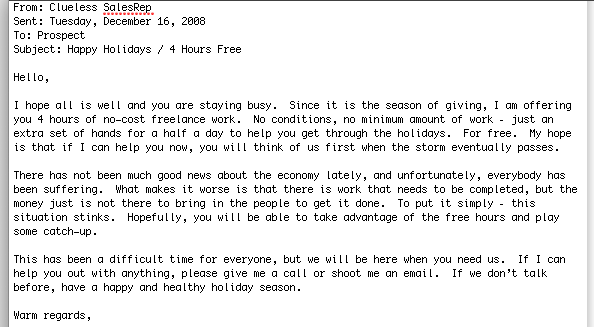
Why would anyone take a salesperson seriously when their first communication – first! – offers a freebie of four hours of work? Let’s see, I don’t yet know what you do. That means I have to take my time to go to your website and figure it out. Then decide if I want four hours free.

If your fear of the economy is showing, maybe you need to take a step or two or nine back. If your product or service had value before the economy tanked, it still does. If you don’t believe that, you can bet that your prospects won’t. Good sales and marketing people know how to position their offering to meet the current needs of their audience. If you can’t figure out how to sell whatever the heck you offer in light of the current economic conditions, the last thing you want to do is give it away. If it ain’t worth anything to you, it’s worth less to me. And I don’t buy the little disclaimer at the end – if you try us out now, you may buy us later. If I don’t need you now, I won’t remember you later.

Instead of doing the email equivalent of cold-calling with a drop-your-shorts offer, how about asking clients who DO see your value and ask them for referrals?

How Strong is Your Referral?

5 Dec

An interesting post on EyesOnSales by Paul McCord got me thinking early this morning.  He says to make sure you know how strong your referral is before contacting the prospect.  Just because someone gave you a referral doesn’t mean that the prospect values that referral.  Seems like common sense to find out what the relationship is and how strong it might be before acting on that referral.

But maybe it’s not common sense.  Inquisix (as you all know!) maps the process of getting (and giving) referrals online.  Just like a SFA system tracks a sale from lead to prospect to opportunity to close, Inquisix tracks referrals from search to ask to get to rate.  Our data shows that the referrals with the best rating almost always have the best exchange of information at the ask and get stage.  Why?  Because at this stage in the referral exchange is where you are networking with another person to gain a referral from them.  Thus, you are exchanging your bona-fides on why you deserve the referral and why they can deliver on the referral.

The best referrals provide you the opportunity to strengthen your reputation with not one but two parties – the person you’re asking the referral of and the person you’re getting the referral to.  Makes sense to take the time to do it right!

Face to Face Networking Revival?

22 Nov

Maybe it’s the recession. Maybe it’s learning first-hand the difference between a friend and a “Facebook friend.” Maybe you’re noticing that the phone’s not ringing and the thought of cold calls is making you take a coffee break. Or maybe it’s just the narrow selection of blogs that I read, but it seems that there’s a plethora of recent blog postings on how to network effectively in the real world.

Adrian Miller, author of The Blatant Truth, is offering a quick primer on improving your networking skills. His key point, “You need to know how to effectively communicate with others, build strong relationships, and make the most out of online and in-person networking opportunities. No, it’s not easy, and it’s certainly time consuming, too. But, the benefits of successful networking can be instrumental in growing your business.” Of his tips, the ones I find people forget about most are “Be Appreciative” and “Follow-up and Follow Through”

Then Erica Stritch of RainToday.com just posted a guide, “Face-To-Face Networking for Professional Services: A Primer for Relationship Building.” You can read an excerpt of it although you need to pay for the full download.

And one of my favorite recent titles is a book from Susan RoAne entitled, “FACE TO FACE: How to Reclaim the Personal Touch in a Digital World” Amazing that people might have forgotten the personal touch when online is so prevalent and easy.

Bottom Line – Successful Networking requires WORK and requires both an ON-LINE and IN-PERSON presence. Do all 3 successfully and you’ll be successful. Drop one and you won’t.

The Virtual Handshake – Building an online business presence

14 Nov

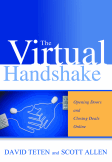
On the recommendation of a friend, I’ve been reading, “The Virtual Handshake” by David Tetten and Scott Allen.  It’s an interesting mix of research into online networking and practical steps to improve your online networking experience.

They suggest that how you build relationships has not changed since the days of networking via face-to-face and email.  What’s changed is the medium in which you network – now it’s primarily the web. I think that while the web is important, it’s primary purpose is to enhance your face-to-face networking, not replace it.

The book focuses on their 7 keys to building and maintaining an effective online network.  I think these steps would be just as applicable in building an effective in-person network.

  • Your Character – what other people think about you.  It’s your reputation
  • Competence – do you walk your talk?
  • Relevance – how relevant is your network to your networking goals?
  • Relationship strengths – how strong is your tie to the people in your network?
  • Information you know about the people in your network – parallel to the strength of your ties is how much non-published information do you know about the people in your network?
  • Number of people in your network – both your direct and two-degrees-away network
  • Diversity – the more heterogeneous your network the better it can help you

The authors believe that social networking software allows you to have the best of both worlds, a large quantity of high-quality connections.  While I don’t agree with this sentiment, as I wrote here, I do concur with their sentiments that successful networkers focus on what they can give you and not what you can give them.

All in all, a good book to read.  Especially if you are looking for a how-to book on building a sustainable and positive online presence.

When a referral is not a referral

28 Oct

I read a great blog post this morning by Diane Helbig on the SalesDog blog entitled, “Don’t Use My Name!

She writes about people who give out someone else’s contact information and tell you to call them but, “…don’t use my name!”  And they consider it a referral.  That’s not a referral, that’s an invitation to start a cold call.

What’s a true referral?  When the person making the referral makes the introduction on your behalf.

You calling someone and saying, “So-and-so gave me your name and told me to call you.” is not a true referral.  And Diane’s example is nothing like a referral. I agree!

Diane thinks this behavior is worse than a cold call because it damages the reputation of the person giving out the contact information and the person acting on that information.

Then she goes on to discuss what quality referrals really mean.

Please go read her article in full!

Get in the Door – Be Assumptive not Consultative

16 Oct

I attended the “Winning Big Company Clients” event in NYC earlier this week.  The event was hosted by Nigel Edelshain, CEO of Sales 2.0 with a panel discussion led by Jill Konrath, author of “Selling to Big Companies” and Razi Imam, CEO of Landslide Technologies.

Jill’s discussion was very interesting.  While she admitted that much of what she wanted to talk about was in her book, it was beneficial to get the synopsis.

Her main point is that the corporate decision makers use the delete key first.  When listening to your voice mail, their finger is on the *3 or whatever key combination they use to delete your voice mail and email.  Their preference is to delete, not listen.  So if you are not relevant, your message is deleted immediately.

That means that you don’t have 30 or even 10 seconds to get your point across.  You have 5 seconds to be relevant.  Her studies have shown that corporate decision makers also believe that it’s your responsibility as the sales rep to call them back.  Jill says that you’re their conscience.

Being relevant means you can’t be consultative.  No more, “Hi, this is Jill and I’d like to understand more about your business issues so that we can find a solution for you.”  Corporate decision makers don’t have the time or desire to educate you.  Jill says that you must be assumptive in your belief that they have a pressing problem and that you can solve it.

Jill says that the corporate decision makers will review 3 things in their head as their finger is poised over the delete key.

  • Are you relevant?
  • Is this an urgent problem?
  • Are you credible, ie are you the one to solve this problem?

I found what she said very timely and very interesting.  Thanks, Jill for your insight.  And thanks to Nigel for hosting!

Cup of Joe and Great Monday Postings

22 Sep

Wow, some of my favorite bloggers all wrote great articles over the weekend and posted them this morning for me to read over my afternoon coffee.

Brian Carroll wrote about top performers building relationships with the right people BEFORE they’re ready to buy. These top performers become trusted advisors.

Paul McCord wrote about why decision makers hate cold calls. He looks at answering a cold call from their point of view. And it’s not pretty.

Geoffrey James says that if you must cold call, try these 7 ways to make it easier. Maybe you can have some of your colleagues cold call your boss to get them to understand how effective (or not) cold calling is.

EyesOnSales has a great post from Lee Salz on why expecting a purchasing decision to be rubber-stamped by the boss is a bad idea.

And for another way to look at cold calling fun, take a look at this video by the HubSpot guys.

Inquisix, the Online Private Club for Referrals

9 Sep

I was asked recently about the color scheme for Inquisix.  All the other web 2.0 sites have white backgrounds with blue and green borders and text.  But Inquisix is brown and orange.  Are we trying to relive the ’70s?

Inquisix is exclusive, it’s member-invite-only, it’s a place to keep your contacts secure but still give and get referrals.  It’s a place to do business, much like the private club your father was a member of.  Leather chairs, wood paneled walls, fireplace in the corner and pictures of famous dead guys all around.  Members quietly conversing over lunch and a martini.  Our website colors are meant to invoke that environment.

Inquisix provides a secure environment for members to give and get referrals with reputable peers.  Inquisix members give referrals to increase their reputation with their customers.  Not sell referrals.  Not to do the member asking a favor.  Rather, members give referrals because they know their reputation as a trusted advisor increases every time they help their customer.  Members get referrals to increase their business because their reputation in the system says that they’re worthy.  Inquisix reputation is earned from your referral rating.  The more and better referrals you give, the better your reputation.  The better your  reputation, the more likely another member will want to give you a referral to their customer.  It’s why you are invited to belong to the club.

At Inquisix you can

  • Ask for a referral from another member
  • Give a referral when someone asks you
  • Get a referral from a member who wants to introduce their contact to you
  • Pro-actively give a referral

At Inquisix, we promise you

  • No one can see your contacts or your relationship to those contacts without your explicit permission
  • Giving one of your contacts as a referral does not let that member see the rest of your contacts
  • Reputation is earned by real feedback from referrals

Do you know what we do now?  Think you should join us?  Ask a member for an invite!

Seth calls it "intangibles" I call it "reputation"

14 Aug

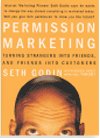
I met Seth Godin years ago at one of those kids activity centers where parents host their pre-schooler’s birthday parties. If you have kids, then you know that pre-school birthday parties means “no drop-off” thus you can’t run a few errands or stop by Dunkin Donuts. I was reading his “Permission Based Marketing” book amongst the happy screams of little kids and I notice out of the corner of my eye that 2 people keep walking past me and smiling. One of them finally approaches me and says, “My husband wrote that book!” The other person walking past me turned out to be her husband, Seth. You’d think that I’d recognize him since his handsome dome was right on the front cover of my book!

I was reading this while my kid was here

Seth’s recent post is about how intangibles are what allows you to charge more for your service vs the commodity-oriented competition. Some of his ideas include participation, enthusiasm, speed, focus, generosity and hope.

Hope? No, not “I hope this deal will close” as that’s not an viable or effective tactic for beating the competition. Instead, “is your offering going to be something great.”

As I’m reading this blog, it struck me that I consider all these intangibles to be my reputation. Just like an intangible, it’s hard to quantify reputation. You either have it or you don’t. Your reputation with your customer is what keeps them coming back to you instead of saving money with your competitor. Your reputation is what gets you the warm welcome when you meet with prospects.

Here’s a few suggestions of mine on ensuring you have the intangibles, the reputation, it takes to compete and win.

Karma Keys to a Referral-Based Business

13 Aug

With 15+ years of sales experience, often working for small companies with no brand recognition or large marketing budgets, I’ve learned that a repeatable process for selling is a must. At the beginning of the sales cycle, giving and getting referrals is key to my business. Cold calling is a necessary evil in sales but it’s less and less effective every day with caller-id and spam filters.

Many sales reps want to GET referrals or will only GIVE a referral if they get one in return. But the most successful referral-based sales reps, business owners and rainmakers know that giving referrals without expectation of one in return is the best course of action in the long term.

My Karma Keys to a Referral-based Business are –

* It’s better to give then receive

Yes, this seems counterintuitive for a sales person but try to give referrals without the expectation you’ll get one in return. That doesn’t preclude you from remembering who behaves the same way you do and networking with them more than others.

* Give referrals to enhance your reputation

Don’t give referrals just as a favor to the person asking for one. Instead, give a referral to enhance your reputation and trust with your colleague that you are making the referral TO. (Often known as the Giver’s Gain theory)

* Get referrals from Customers, Vendors & Sales Colleagues

Don’t limit asking for referrals from customers as your vendors and sales colleagues often have great connections they’d be happy to introduce you to.

* Reputation Matters

No surprise but the better your reputation, the more likely you are to get referrals and be asked for referrals. If you say you can give a referral, make sure that you follow through with that warm introduction. If you get a referral, treat your colleague’s contact with the utmost respect.